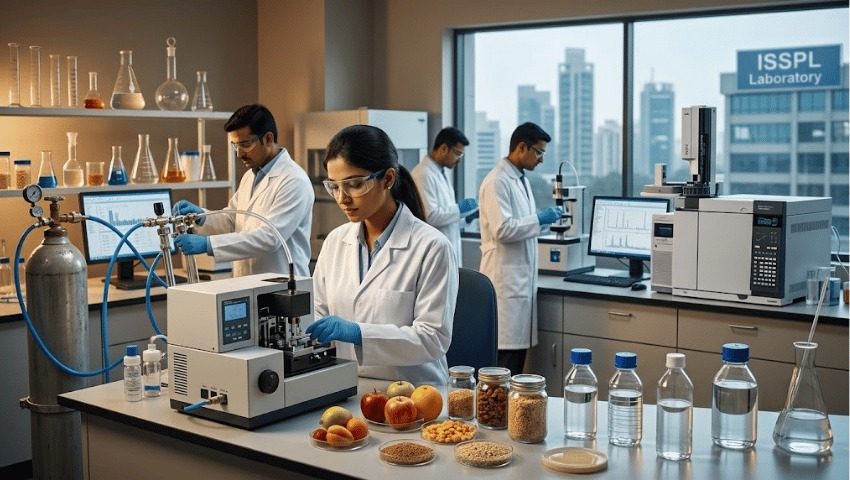
A water testing lab in India analyses drinking, packaged, groundwater, process, borewell and waste water against physicochemical and microbiological parameters. Testing checks whether water is safe for its intended use and supports compliance with standards such as IS 10500 and FSSAI requirements. Food businesses using water as an ingredient are expected to test it periodically at an FSSAI notified or NABL accredited laboratory.
When Clean-Looking Water Fails a Test
Water can look perfectly clear and still carry contamination you cannot see. A borewell that has supplied a facility for years can shift in quality after a change in the water table. A packaged water batch can pass on appearance yet fail on a single microbiological parameter. By the time the problem surfaces in a product complaint or an audit finding, the cost is no longer a laboratory fee. It is stock on hold, a delayed dispatch, or a regulatory query.
This article explains what water testing covers, which parameters matter for different water categories, the Indian standards that apply, and how often you should test. It also covers how to select a NABL accredited water testing laboratory and confirm the right scope for your purpose.
Key takeaways:
- Visual clarity tells you nothing about chemical or microbiological safety.
- Different water categories require different testing parameters.
- IS 10500 and FSSAI requirements govern much of water testing in India.
- Accreditation and approval apply to specific tests, not to a laboratory as a whole.
What Water Testing Is and Why It Matters
Water testing is the laboratory analysis of a water sample against defined parameters. The laboratory measures physical, chemical and microbiological attributes and reports whether they fall within the limits set for the water’s intended use.
The purpose is to replace assumption with evidence. A facility may believe its supply is safe. A test confirms whether it actually is. Water quality analysis in India supports three connected needs at once. It protects health where water is consumed or used in food. It protects processes where water quality affects a product. And it supports compliance where a standard or regulator sets requirements.
This does not mean every sample needs the same panel. A drinking water sample and an industrial effluent sample carry different concerns and different parameters. The appropriate scope follows the water category, its intended use, and the applicable standard.
Why Different Water Categories Need Different Testing
Water is not a single product. The reason for testing, and the parameters that matter, change with the category.
Drinking Water
Drinking water carries a direct health risk. Contaminated supply is a recognised route for waterborne illness, and pathogens such as E. coli and coliform bacteria are common indicators of faecal contamination. Drinking water testing in India typically combines physicochemical checks with microbiological analysis to confirm the water is safe for consumption.
Packaged Water
Packaged water is a regulated product, not just a supply. Packaged water testing applies to packaged drinking water and packaged natural mineral water, where both product quality and applicable standards matter. A batch that looks acceptable can still fail on a microbiological or chemical parameter, which is why testing supports release rather than assumption.
Groundwater and Borewell Water
Groundwater quality can change over time. A groundwater testing lab assesses supply drawn from below the surface, where contamination can enter through the surrounding soil, nearby activity or a shifting water table. Borewell water testing is relevant for facilities and premises relying on a borewell, because a source that tested clean once may not stay that way.
Process Water and Industrial Water
Process water can affect the product it touches. Process water testing matters where water becomes part of a manufacturing operation, a cleaning step, or the finished product itself. Industrial water testing also supports equipment reliability, since parameters such as hardness and dissolved solids can affect plant and machinery.
Wastewater
Wastewater carries environmental obligations. Wastewater testing in India assesses domestic sewage and industrial effluent against discharge related requirements, and it often connects to environmental compliance work overseen by pollution control authorities.
Swimming Pool Water
Swimming pool water needs regular monitoring. Parameters such as residual chlorine, pH and microbiological quality determine whether pool water is safe for use, and these can drift quickly with load and temperature.
Key Water Testing Parameters
Water testing parameters fall into three groups. The right combination depends on the water category and its intended use.
Physical Parameters
Physical parameters describe attributes you can often detect through the senses, measured objectively in the laboratory. These include colour, turbidity, odour and taste. They give an early indication of water quality, though they do not, on their own, confirm safety.
Chemical Parameters
Chemical parameters measure dissolved substances that affect quality and safety. Physicochemical water analysis commonly covers pH, hardness, total dissolved solids, chlorides, and residual chlorine, along with metals and other constituents depending on the source. Some parameters, such as pH, turbidity and residual chlorine, are sensitive to storage and are best checked promptly after sampling.
Microbiological Parameters
Microbiological parameters detect harmful organisms. Microbiological water testing checks for indicators of contamination such as coliforms and E. coli, which signal a food safety or public health concern. For drinking and packaged water, this analysis is central rather than optional.
The key distinction is this. Physical and chemical results describe the character of the water, while microbiological results address contamination risk. Most drinking and packaged water assessments need all three groups together.
Indian Standards and Regulatory Context
Water testing in India is guided by recognised standards. Knowing which one applies helps you define the correct scope.
IS 10500 is the Bureau of Indian Standards specification for drinking water. IS 10500 water quality standards set acceptable limits and permissible values for physical, chemical and microbiological parameters in drinking water. It is the common reference point for assessing whether water is fit for human consumption.
For food businesses, FSSAI requirements add a further layer. FSSAI guidance provides that food businesses using water as an ingredient in food should get the water tested against BIS IS 10500, other than radioactive parameters, at defined intervals, and FSSAI material indicates such testing at least once every six months from an FSSAI notified or NABL accredited laboratory. Requirements can change, so confirm the current provision that applies to your operation before finalising a testing schedule.
Broader water quality standards are also referenced by bodies such as APHA, CPCB and WHO, with the applicable norm depending on the water’s purpose. Packaged drinking water and packaged natural mineral water carry their own BIS specifications relevant to those products.
Importantly, a test report is analytical data. It supports compliance decisions, but a report on its own does not constitute regulatory approval. Compliance depends on the applicable standard, the water’s intended use, and how the data is applied.
When and How Often to Test Water
Testing once gives you a snapshot, not a trend. Frequency should follow the water category, its use, and the applicable requirement rather than a single fixed habit.
Consider testing in these situations:
- On a defined schedule for drinking water, and at least once every six months where you use water as a food ingredient, subject to the current FSSAI provision.
- Before releasing a batch of packaged water, in line with the applicable product standard.
- Periodically for groundwater and borewell supply, since source quality can shift over time.
- After any change to the source, treatment system or storage arrangement.
- Following a contamination concern, an unusual taste or odour, or an unexplained quality failure.
- Routinely for wastewater, in line with discharge related obligations.
Routine testing also builds a record. When results begin to move, a facility can often identify a developing problem before it affects health, product or compliance.
How to Select a NABL Accredited and FSSAI Approved Water Testing Lab
Choosing a laboratory is a technical decision as much as a commercial one. A few markers help you compare providers on more than price.
- Accreditation scope. NABL accreditation confirms technical competence for specific named tests. Check that your water category and parameters fall within the accredited scope of the NABL accredited water testing laboratory you are considering.
- Relevant approval. For food related testing, confirm FSSAI approved water testing status appropriate to your purpose, since FSSAI expects testing from an FSSAI notified or NABL accredited laboratory.
- Parameter coverage. Confirm the laboratory can handle the physical, chemical and microbiological parameters your category requires.
- Method suitability. The laboratory should apply validated methods appropriate to your parameters and reporting limits.
- Sampling capability. Correct sampling and prompt handling affect the reliability of results, particularly for parameters such as pH, turbidity and residual chlorine.
- Turnaround. Confirm a realistic timeline, noting that microbiological analysis requires incubation time.
Accreditation and approval both apply to defined tests and purposes. It would therefore be inaccurate to assume that a laboratory holding NABL accreditation is accredited for every water test it offers. Always check the specific parameter, on your specific water category, against the accredited scope.
How ISSPL Testing Lab Supports Water Testing
ISSPL Testing Lab is operated by IRCLASS Systems and Solutions Pvt Ltd, an independent analytical testing service provider in India. Water testing sits within its dedicated water testing services.
The coverage spans the main water categories. ISSPL provides testing for drinking water, groundwater, borewell water, packaged drinking water, packaged natural mineral water, processed water and wastewater, among other applications. This range matters because a food manufacturer, a packaged water brand and an industrial facility rarely need the same panel, and a single laboratory that covers several categories reduces the number of providers you coordinate.
On accreditation and approval, ISSPL states that its laboratory holds recognitions including NABL, accredited against ISO/IEC 17025, and FSSAI, alongside other approvals relevant to its wider testing work. For a food business required to test water as an ingredient, that combination is directly relevant, because FSSAI expects such testing from an FSSAI notified or NABL accredited laboratory. The specific parameters should still be confirmed against the applicable scope, since a recognition does not cover every test by default.
ISSPL operates across India with sampling support, which matters for water testing, where correct sample collection and prompt handling directly affect the reliability of the result. For food businesses, packaged water brands, manufacturers, industries and institutions, this allows water testing to be planned around the actual requirement rather than split across several providers.
This does not mean every business needs the full range of services. The relevant point is that the scope can be matched to your water category, your parameters and your purpose.
Frequently Asked Questions
What parameters are checked in water testing?
Water testing covers physical parameters such as colour, turbidity and odour, chemical parameters such as pH, hardness, total dissolved solids and residual chlorine, and microbiological parameters such as coliforms and E. coli. The exact combination depends on the water category and its intended use.
How often should food businesses test their water?
FSSAI guidance indicates that businesses using water as an ingredient should test it against BIS IS 10500, other than radioactive parameters, at least once every six months from an FSSAI notified or NABL accredited laboratory. Requirements can change, so confirm the current provision that applies to your operation.
What is IS 10500 in water testing?
IS 10500 is the Bureau of Indian Standards specification for drinking water. It sets acceptable and permissible limits for physical, chemical and microbiological parameters, and it serves as the common reference for assessing whether water is fit for human consumption.
Does a water test report guarantee regulatory compliance?
No. A report provides analytical data on the sample tested. Regulatory compliance depends on the applicable standard, the water’s intended use, and how the data is applied. A test report supports compliance decisions but does not by itself constitute approval.
Can one laboratory test drinking, packaged, groundwater and waste water?
Yes, where the laboratory holds coverage across those categories. A single provider reduces coordination and keeps reporting consistent. Confirm that each required test, on your specific water category, falls within the accredited or approved scope.
How much does water testing cost in India?
Cost depends on the water category, the number of parameters, the test methods and any sampling support required. Because these factors vary, pricing is best confirmed against a defined scope rather than a single fixed rate.
How long does water testing take?
Turnaround depends on the parameters requested. Microbiological analysis requires incubation time, so it typically takes longer than physical and chemical checks. Sharing your full parameter list and water category at the enquiry stage allows the laboratory to advise a realistic timeline.
Test Your Water Before It Becomes a Problem
Water quality rarely announces itself. Clear water can carry contamination, and a source that tested well once can change with time, use or season. Testing turns an assumption into verified data, and it does so while there is still time to act, whether the concern is health, product quality or compliance.
Businesses requiring water testing can contact ISSPL Testing Lab to discuss their water category, intended use, applicable parameters and the right testing scope. A short conversation about your source, your purpose and the standard that applies is usually the fastest way to define the correct panel before a quality or compliance issue arises.