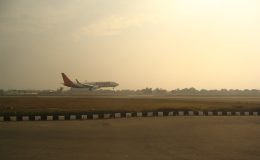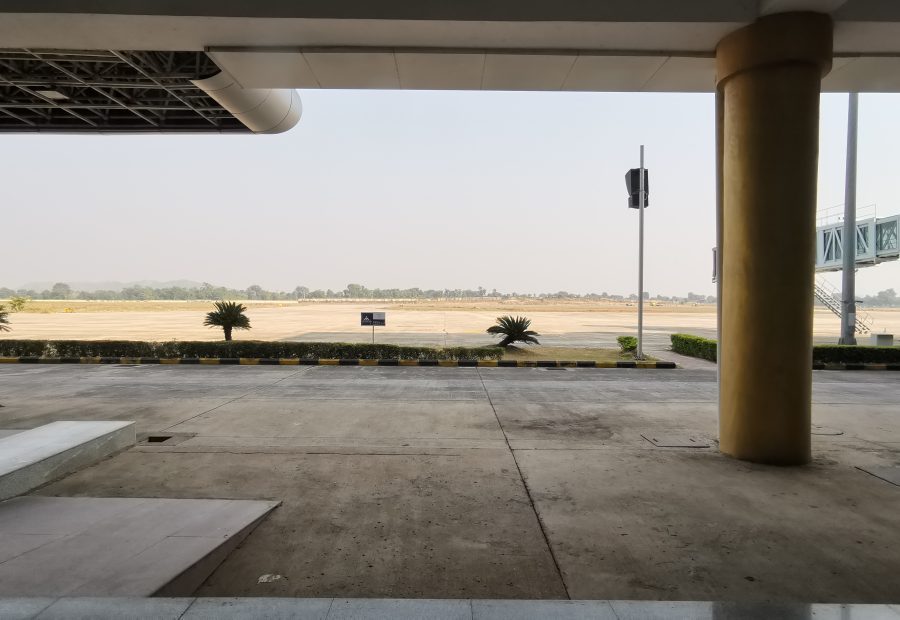
Khajuraho Airport has been ranked India’s best, yet it currently runs no commercial flights.
The 2026 National Service and Customer Satisfaction Index survey, carried out by the Airports Authority of India, ranked the airport first for passenger facilities, cleanliness, security and service quality rather than flight numbers.
Flights at the airport have been suspended through July and August for runway and other technical works, with a resumption expected around October.
Before the suspension, Khajuraho Airport had only two scheduled flights, connecting it to Delhi and Varanasi.
Airport director Santosh Singh said the ranking “reflected the hard work of the entire airport staff and the trust of passengers,” adding that the survey was conducted while flights were still operating.
He said commercial services would resume once the ongoing runway work was completed.
Bhopal’s Raja Bhoj Airport placed third nationally in the survey, and Khajuraho had also topped the AAI’s customer satisfaction survey in December 2025.
Local residents have questioned how the airport can be ranked best in the country while running zero flights this July and August.
Khajuraho Airport’s runway measures 2,286 metres by 45 metres, and its terminal building, inaugurated in January 2016, was built at a cost of around Rs 90 crore.
Most passengers using the airport are headed to the Khajuraho Group of Monuments, a UNESCO World Heritage Site known for its medieval temple carvings, a short distance away.
Built between the 9th and 12th centuries by the Chandela dynasty, the temple complex ranks among the most visited heritage sites in central India.
Khajuraho is best known internationally for its UNESCO World Heritage-listed group of temples, and the airport primarily serves tourists visiting the site as well as pilgrims and business travellers to the region.
The Airports Authority of India conducts its National Service and Customer Satisfaction Index survey periodically to benchmark airports on the quality of the passenger experience they offer, independent of how much traffic they handle.
(Image: Photo by Z thomas, Wikimedia Commons, CC BY-SA 4.0)