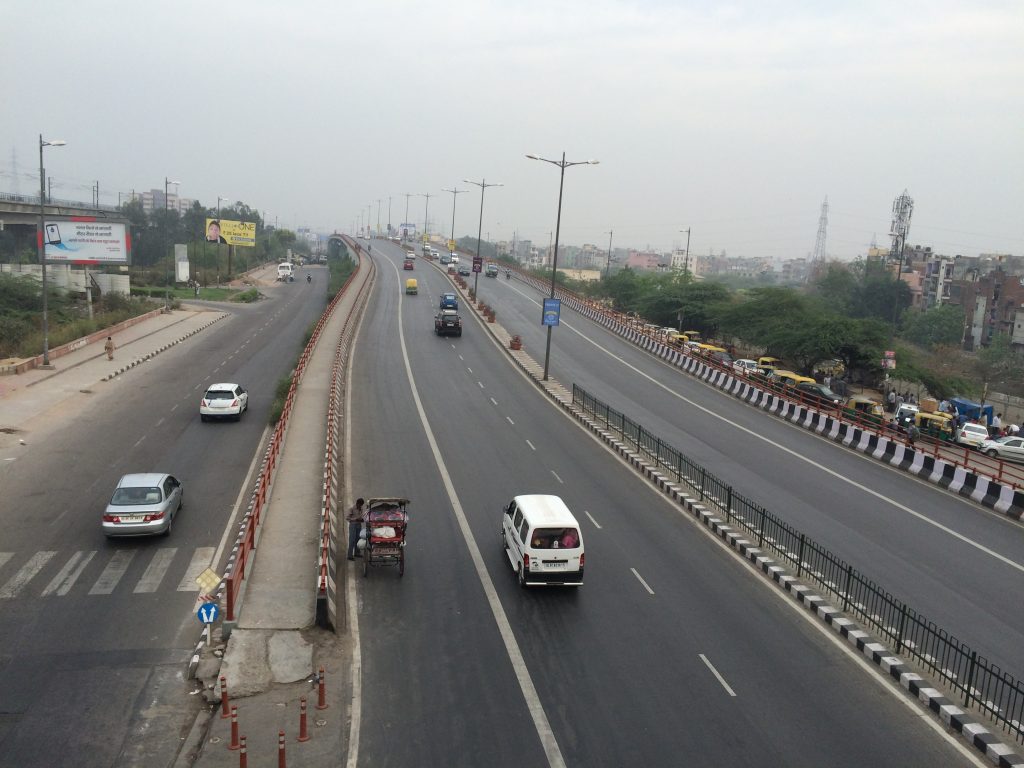
The Barapullah Phase III corridor, delayed in the past partly over land acquisition issues, opened in Delhi on September 29.
It connects Mayur Vihar Phase I to Sarai Kale Khan via a signal-free elevated link.
Union Home Minister Amit Shah inaugurated the corridor, with CM Rekha Gupta and PWD Minister Parvesh Verma in attendance.
Travel time between Mayur Vihar and AIIMS is expected to fall to about 15 minutes.
The combined Barapullah corridor now spans nearly nine kilometres.
The Barapullah corridor project has been developed in phases over several years.
Elevated, signal-free corridors of this kind are designed to reduce the number of traffic signals commuters pass through on a given route.
Delhi’s Public Works Department has been responsible for executing major road and flyover projects across the city.
Improved east-west connectivity has been a recurring priority in Delhi’s urban infrastructure planning.
The project was executed by Delhi’s Public Works Department in coordination with other civic agencies.
Officials said the corridor is expected to reduce commuting stress for thousands of daily travellers between East and South Delhi.
The inauguration event drew attention from residents who had followed the project’s progress over several years.
Delhi has seen several major road and flyover projects completed in recent years as part of broader efforts to ease traffic congestion.
Similar elevated, signal-free corridors have been built in other parts of Delhi to address chronic traffic bottlenecks.
Union Home Minister Amit Shah inaugurated the Barapullah Phase III corridor in Delhi on September 29, 2026.
The corridor provides a signal-free elevated link between Mayur Vihar Phase I in East Delhi and Sarai Kale Khan.
It connects with the existing Barapullah corridor at Sarai Kale Khan, taking the combined corridor’s length to nearly nine kilometres.
The new link is expected to cut travel time between Mayur Vihar and AIIMS to about 15 minutes.
Elevated flyover, Delhi (representative image), Wikimedia Commons, CC BY-SA 4.0