
Cyclone Arnab is forecast to make landfall on the Andhra Pradesh coast on the morning of October 28, 2026, as a very severe cyclonic storm, according to the IMD as reported by Business Standard and Deccan Herald.
Red alerts cover districts from Kakinada and Konaseema to Guntur, and Chief Minister N Chandrababu Naidu has asked officials to stay on high alert.
Reports differ on the timing and on the alert lists.
Evacuation numbers and response deployments were not reported.
Andhra Pradesh Chief Minister N Chandrababu Naidu has directed officials to stay on high alert and take precautionary measures to minimise inconvenience to the public, according to the reports.
Heavy rain has led to school closures in several districts of Tamil Nadu, according to LatestLY’s Chennai roundup of October 26.
Reports differ slightly on the timing of landfall, with some saying morning and others morning to afternoon, and on the exact lists of districts under alert.
The reports reviewed did not give the number of people to be evacuated or the deployment of disaster response teams.
A cyclonic storm is classed as very severe when sustained winds reach about 118 to 165 kmph, according to the IMD’s classification.
Landfall is the point at which the centre of a cyclone crosses the coast.
Fishermen are normally advised not to venture into the sea when a cyclone warning is in force.
Residents of coastal areas should follow the advisories of the IMD and the state disaster management authority.
The track and intensity of a cyclone can change, so the latest IMD bulletins should be checked.
Cyclone Arnab is expected to make landfall on the Andhra Pradesh coast on the morning of Wednesday, October 28, 2026, according to Business Standard, Deccan Herald and Deccan Chronicle.
The India Meteorological Department’s Bhubaneswar unit said the system is expected to reach the west-central Bay of Bengal near the Andhra coast around that morning, according to the reports.
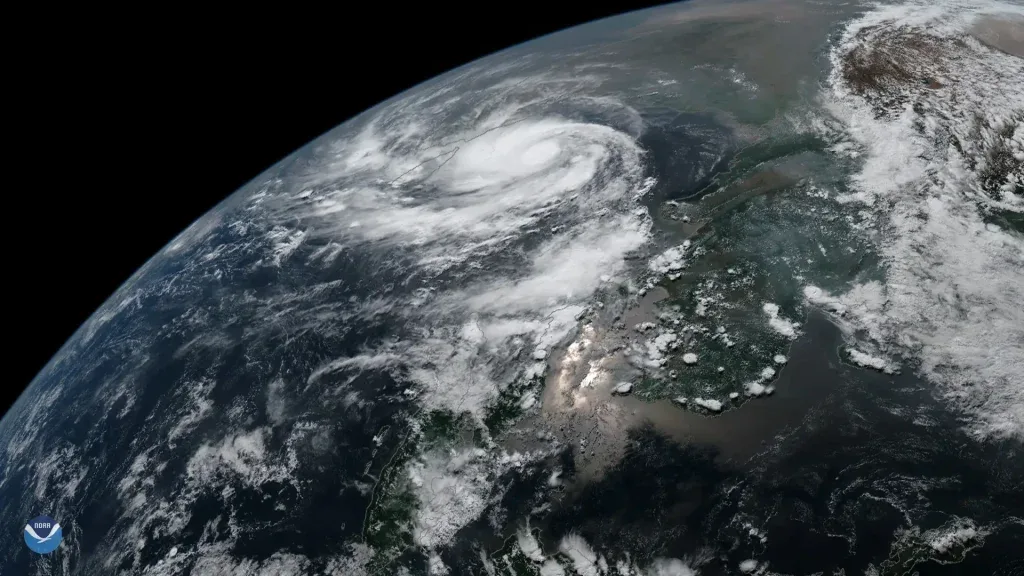
Satellite image of Cyclone Fani over the Bay of Bengal in 2019 (file image, not Cyclone Arnab), NOAA via Wikimedia Commons, public domain